CATEGORIES
START HERE
SURF IN MOROCCO
Small-group surf stays
North-Central Morocco
Surf Progression: A Smarter Way to Learn Surfing
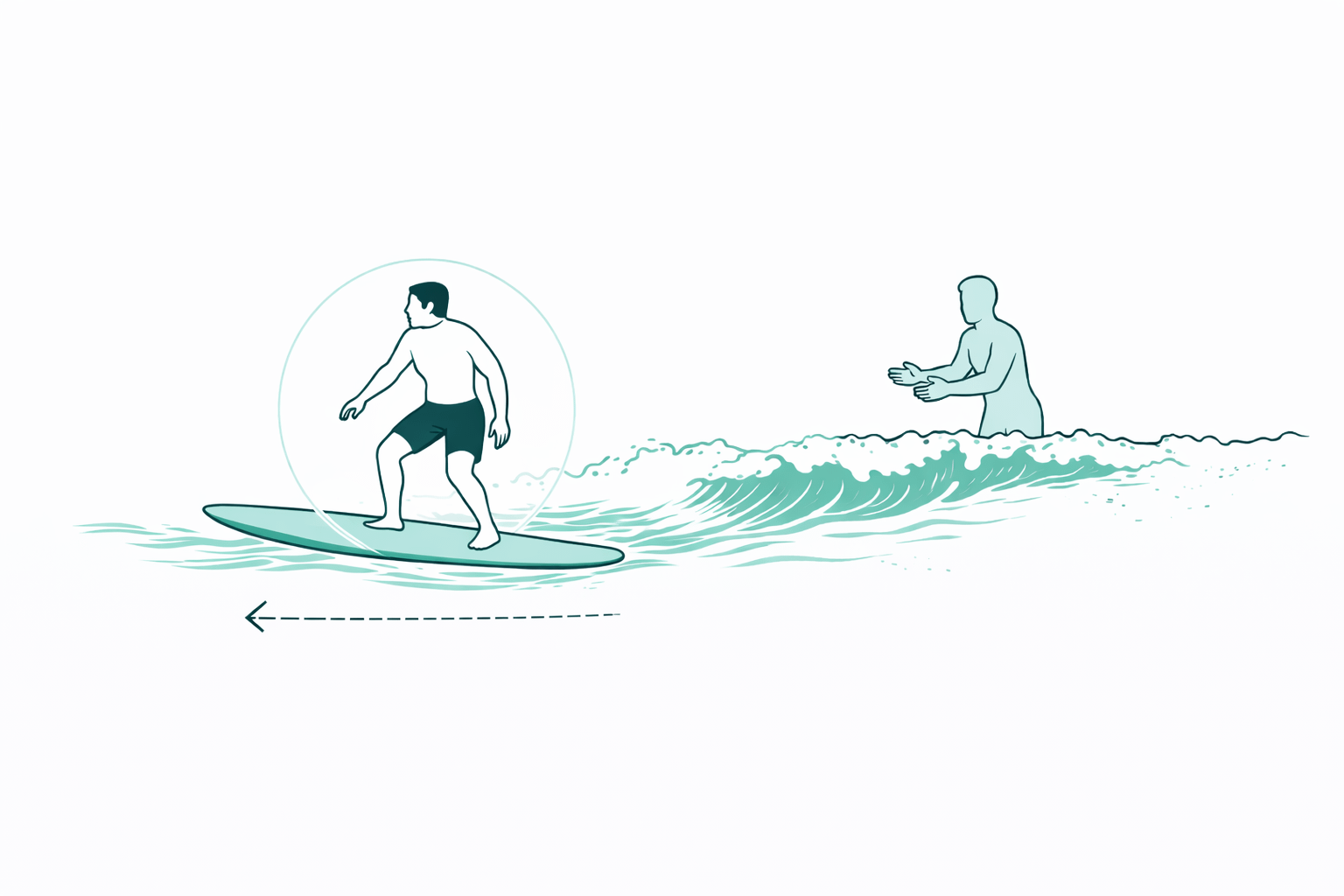
We at La Crique push people into waves. Literally.
And yes, not everyone agrees with this method.
Some coaches don’t approve it. Some say it’s old school. Others claim it creates dependency.
I hear those arguments often.
And I also see the results.
This article is about surf progression and learning method, not opinions. It’s about what actually helps beginners learn without getting overwhelmed, frustrated, or stuck.
Surfing Is Harder to Learn Than People Admit
Surfing takes a lot to learn.
When you really break it down, a beginner has to learn all of this at once:
How to paddle.
How hard to paddle when a wave comes.
When to paddle.
Where to paddle.
How to take off.
Where to place the feet.
How to stay balanced on a moving board.
That’s a lot.
For someone who has never surfed before, this isn’t just technical. It’s overwhelming.
This is where many surf learning methods fail.
The Problem With Teaching Everything at Once
Many surf lessons throw beginners straight into the lineup and start shouting instructions.
“Paddle!”
“Go!”
“Now!”
“Stand up!”
“Too late!”
From the coach’s perspective, it makes sense. They see everything at once.
From the beginner’s perspective, it’s chaos.
The brain can’t process timing, positioning, paddling, balance, and fear all at the same time.
So what happens?
People freeze.
They miss waves.
They get exhausted.
They feel incapable.
After a few sessions, many simply stop coming.
That’s not a motivation problem. It’s a learning design problem.
Our Surf Learning Method: One Skill at a Time
At La Crique, we simplify surf progression on purpose.
Yes, we push people into waves.
And we do it intentionally.
Not because beginners can’t learn.
But because beginners shouldn’t have to learn everything at once.
The first thing we focus on is simple:
Learn how to stand up and stay up.
No timing stress.
No positioning decisions.
No paddling exhaustion.
Just one objective: stand up, feel the board glide, and stay balanced.
Once that skill is in the body, confidence changes immediately. Fear drops. Motivation rises. Surfing starts to feel possible.
Why This Method Accelerates Surf Progression
When beginners don’t have to worry about paddling and positioning, mental load drops.
They can focus on:
Body position.
Foot placement.
Balance.
Feeling the wave.
That feeling matters.
Surfing isn’t learned intellectually. It’s learned through sensation.
Once someone knows what it feels like to stand and glide, everything else has a reference point.
Only then do we layer skills.
First: timing — when to paddle, when to commit.
Then: positioning — where to sit, which waves to take, which to let go.
At that stage, paddling has purpose instead of being random effort.
Does Pushing Create Dependency?
This is the most common criticism.
The idea is that if you push people into waves, they’ll always rely on someone else.
In reality, we see the opposite.
Dependency is created when people don’t understand what they’re doing.
Confidence is created when people experience success early.
Once beginners know how to stand and ride, they become far more motivated to learn paddling, timing, and positioning.
They want autonomy, not help.
Trust me. This method works.
A Real Comparison: Two Coaches, Two Outcomes
A friend of mine is also a surf coach. Very good surfer.
His approach is different.
He puts students in the water, shouts instructions from a distance, then goes surfing himself.
Most of his students don’t come back.
That’s not surprising.
Many coaches want to surf, which is understandable. But they forget something important: beginners are structurally dependent at first.
They need presence, feedback, and real-time guidance.
Surf progression doesn’t happen when the coach disappears.
Support Comes Before Independence
Independence is the goal.
But it’s not the starting point.
In the beginning, beginners need:
Safety.
Clarity.
Repetition.
Encouragement.
Once those are in place, independence comes naturally.
Throwing people into complexity too early doesn’t make them resilient.
It makes them quit.
Final Takeaway
There are many ways to teach surfing.
But if a method leaves people exhausted, confused, and discouraged, it’s not character building. It’s poor pedagogy.
Surfing should challenge you.
Learning it should empower you.
That’s what real surf progression looks like.
About the Author: Coach Dris