CATEGORIES
START HERE
SURF IN MOROCCO
Small-group surf stays
North-Central Morocco
Ocean Knowledge for Surfers: How Waves Work and When to Surf
One of the most common questions surfers ask is simple and completely legitimate:
“Are there waves during this season?”
It’s a good question. You should always ask it.
But beyond asking, learning some basic ocean knowledge gives you something far more valuable: the ability to understand why waves show up, when they arrive, and where they break best.
Once you understand that, you stop guessing. You start reading conditions. And your surfing improves long before you even paddle out.
Where Do Surf Waves Come From?
Surf waves do not come from the beach.
They are born far offshore.
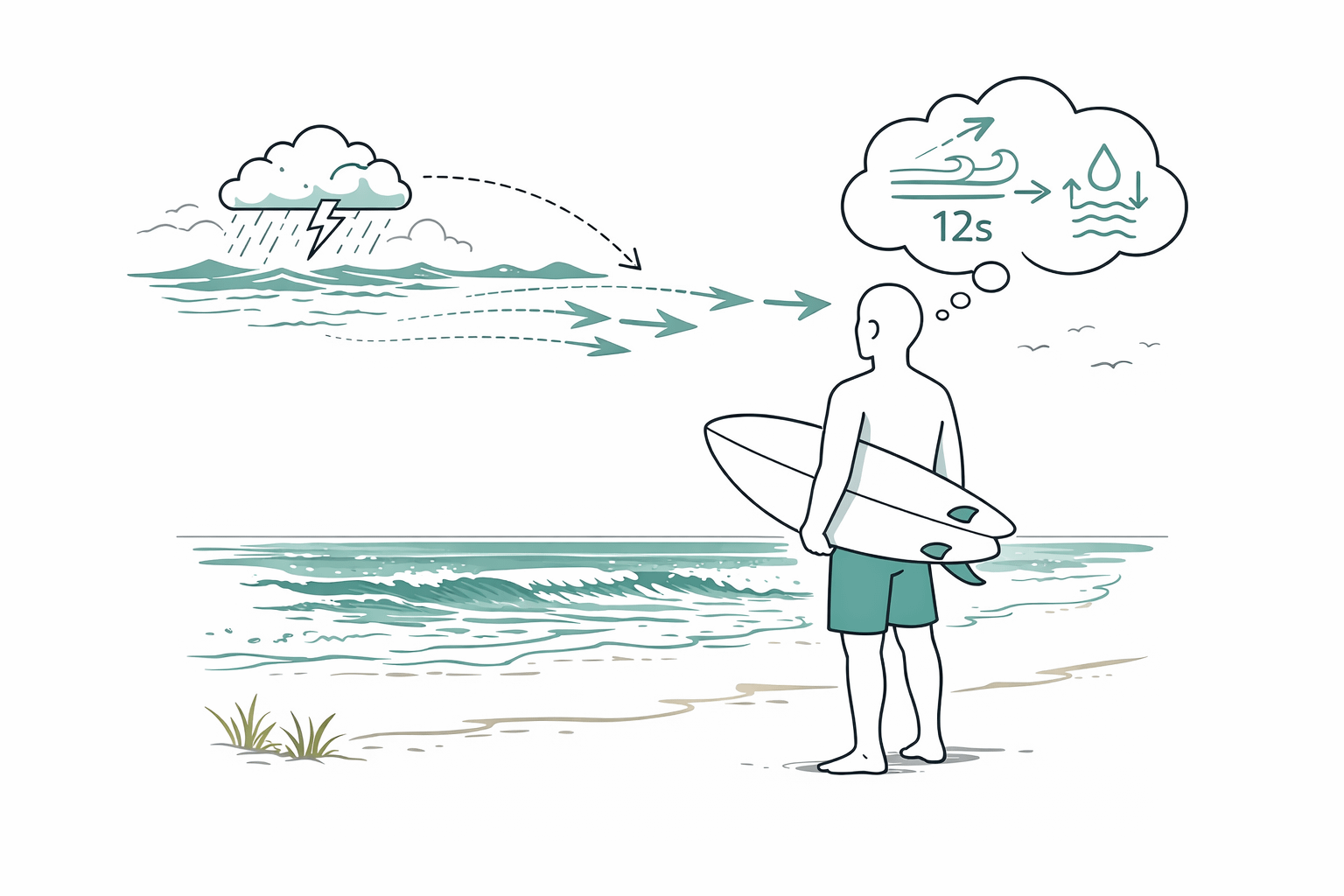
Most surfable waves are generated by storms in the open ocean. Strong winds blowing over large distances transfer energy to the water surface. That energy then travels across the ocean as swell until it reaches land.
What matters most is not just wind strength, but distance and duration. The longer and more consistently wind blows over open water, the cleaner and more organized the swell becomes.
That’s why waves that travel long distances usually feel smoother, more powerful, and more predictable when they arrive.
Why Swell Seasons Change Around the World
On a global scale, surf seasons follow a clear pattern.
The Northern Hemisphere generally produces its strongest and most consistent swells from early autumn to early spring, roughly October to April.
The Southern Hemisphere produces most of its swell from April to October.
This happens because of the Earth’s tilt.
As the planet tilts toward one hemisphere, that side experiences colder air masses and stronger temperature contrasts. Those contrasts drive storm systems, which generate ocean swell.
When one hemisphere is in summer, the other is in winter. And winter is storm season.
This doesn’t mean there are no waves outside these windows. It means that the most powerful and consistent swells usually follow this rhythm.
From Storm to Shore: How Swell Travels
Swell is not water traveling across the ocean. It’s energy moving through water.
At the storm source, waves are chaotic and messy. As that energy travels, shorter and weaker waves fade out while longer, stronger waves continue.
By the time swell reaches the coast, what remains is a more organized wave pattern.
This is measured by swell period, which tells you how much time passes between waves.
Short period swells usually mean weaker, choppier waves.
Longer period swells usually mean cleaner, more powerful waves.
Longer period swells carry more energy, which often means better wave quality but also more power when they break.
Why Waves Break the Way They Do
A wave only becomes surfable when it interacts with the sea floor.
As swell approaches land, the water gets shallower. The bottom of the wave slows down while the top keeps moving, causing the wave to rise and eventually break.
How a wave breaks depends on how quickly the sea floor rises.
A gradual seabed creates longer, peeling waves.
A sudden seabed change creates faster, heavier, or closing waves.
This is why point breaks, bays, and curved coastlines often produce cleaner and longer rides, while flat beaches tend to create more closeouts.
Why Bays, Points, and Creeks Work So Well
When a coastline is not straight, waves don’t arrive at the same angle all at once.
Bays and points allow swell to wrap and break progressively instead of all at the same time. This creates longer rides and more predictable takeoffs.
That’s why experienced surfers often look for:
Bays.
Points.
Headlands.
Jetties.
These natural features shape waves before they break.
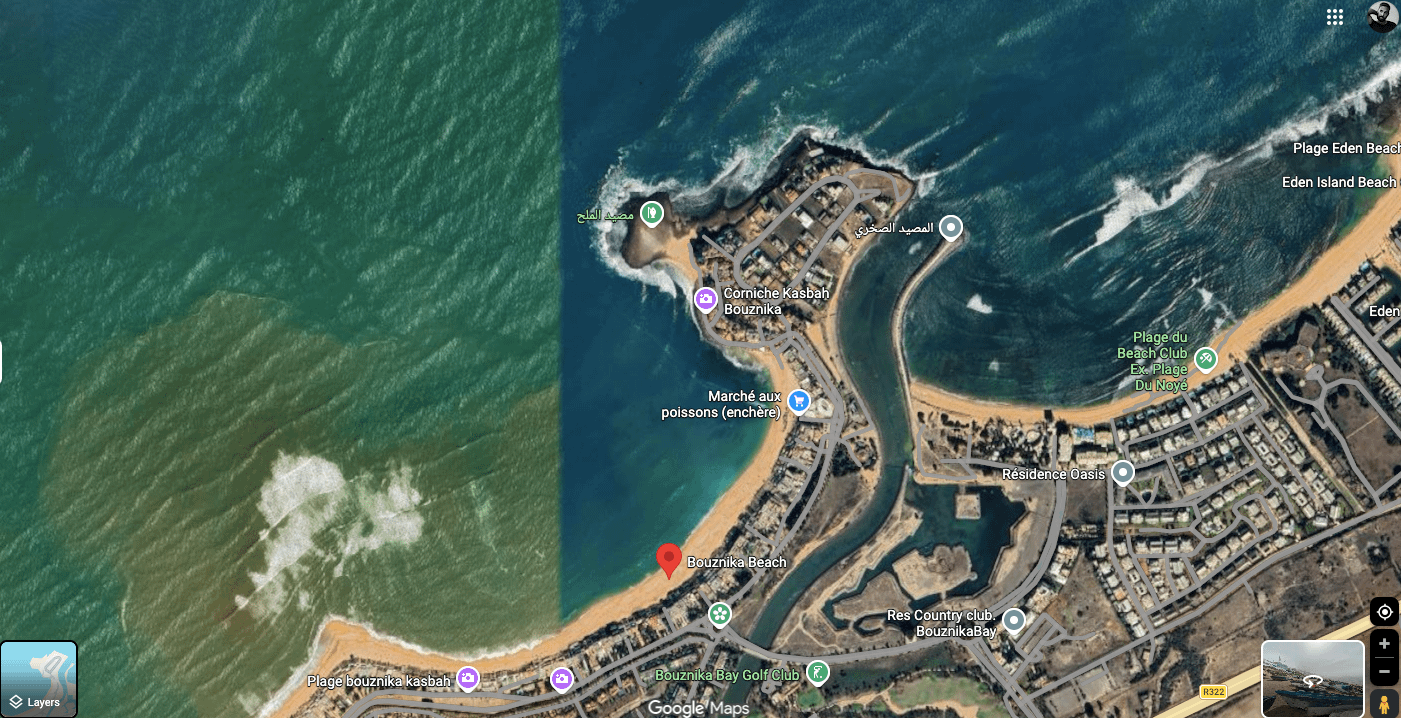
Sensitivity and Protection: Why Some Spots Work More Often
Not all surf spots react the same way to swell. Some spots are very sensitive and pick up small swells easily. Others need larger swells to break properly. Sensitive spots are great for consistency, but when swell gets too big, they can become messy or overwhelming. Protected spots, such as sheltered bays or coves, allow surfers to find cleaner waves when conditions are heavy elsewhere. Regions with varied coastline shapes offer more options across different swell sizes and directions.
Using Morocco as an Example
Morocco is a good example of how coastline orientation affects surf.
North-facing coastlines can receive waves even outside peak Northern Hemisphere storm season because of exposure and sensitivity. The same sensitivity can create messy conditions during very large winter swells, which is why protected bays become important. Further south, the coastline works better with larger swells but becomes quieter outside peak seasons due to shelter and orientation.
The principle applies everywhere: coastline shape and direction matter just as much as swell size.
Can You Find Waves All Year Round?
Yes, depending on where you go and what you surf.
Instead of asking only “Is there surf this month?”, a better way to think is:
Which hemisphere is producing swell?
What direction does it travel?
How does the coastline receive it?
Once you understand these basics, surf forecasting becomes far less mysterious.
And of course, local knowledge always matters.
Final Takeaway
Ocean knowledge doesn’t replace surfing skill.
It multiplies it.
When you understand how waves are generated, how they travel, and why they break the way they do, you make better decisions before you even wax your board.
You choose better spots. You time your sessions better. You progress faster.
And if you’re ever unsure, ask. That’s what we’re here for.
About the Author: Coach Dris