CATEGORIES
START HERE
SURF IN MOROCCO
Small-group surf stays
North-Central Morocco
How to Start Surfing (Without Making It Harder Than It Needs to Be)
Most people don’t fail at surfing because it’s too difficult.
They fail because they try to start surfing the wrong way.
Some arrive at the beach full of fear, convinced they won’t be able to do it. Others arrive overconfident, jumping straight onto short boards they’ve seen on Instagram. Both usually end up frustrated, tired, or stuck at the same level far longer than necessary.
If you’re wondering how to start surfing properly, the answer sits right between those two extremes.
Surfing rewards patience, structure, and humility far more than bravado.
The Biggest Mistake When You Start Surfing
The most common mistake beginners make is believing that standing up quickly means they are learning fast.
Standing up once feels amazing. It’s a rush. It’s a photo moment. And many surf experiences are built around that instant satisfaction. But standing up on day one is not the same thing as learning how to surf.
Learning how to start surfing well is about building foundations that hold when conditions change, when waves get bigger, and when no one is pushing you into them anymore.
That foundation starts with the right board.
Why the Right Board Matters When You Start Surfing
I learned this the hard way.
When I started surfing, I had no guidance. I went straight onto boards that were too small, too thin, too advanced for where I was. I thought that was progress. In reality, it slowed everything down.
If you are starting surfing, a soft top surfboard is not a beginner’s crutch. It is a learning tool.
A soft top allows you to paddle with less effort, catch more waves, and focus on timing and balance instead of survival. It gives you margin for error, which is exactly what beginners need.
Using a soft top for one full season, sometimes even a full year, is not a lack of ambition. It is often the fastest way to real progress.
Moving to a hard board too early usually does the opposite. Thinner rails turn faster, yes, but only if you already know how to control them. Without solid fundamentals, many surfers stay stuck for years, mistaking struggle for advancement.
How to Start Surfing Is Not Just About the Board
Surfing doesn’t happen on land. It happens in a moving, unpredictable environment.
When you start surfing, learning to read the ocean is just as important as learning to stand up. Where you sit, when you paddle, which waves you choose, and which ones you let go all matter more than strength.
This is where good coaching changes everything.
A good surf coach doesn’t just tell you what to do. They explain why you are paddling there, why that wave works, and why another one doesn’t. They help you understand positioning, not just mechanics.
Without that understanding, surfing feels chaotic. With it, things start to slow down.
Why Surfing Feels Overwhelming at First
Your first surf sessions are intense, even when conditions are gentle.
You’re learning a new paddling technique that uses muscles you don’t normally train. Even with correct form, your shoulders and arms fatigue quickly. Add balance, wave timing, and fear of falling, and it’s no surprise beginners feel exhausted.
That exhaustion is not a sign you’re doing badly. It’s a sign your body is adapting.
The mistake many people make is trying to push through everything at once instead of breaking learning into digestible steps.
A Smarter Way to Start Surfing: One Skill at a Time
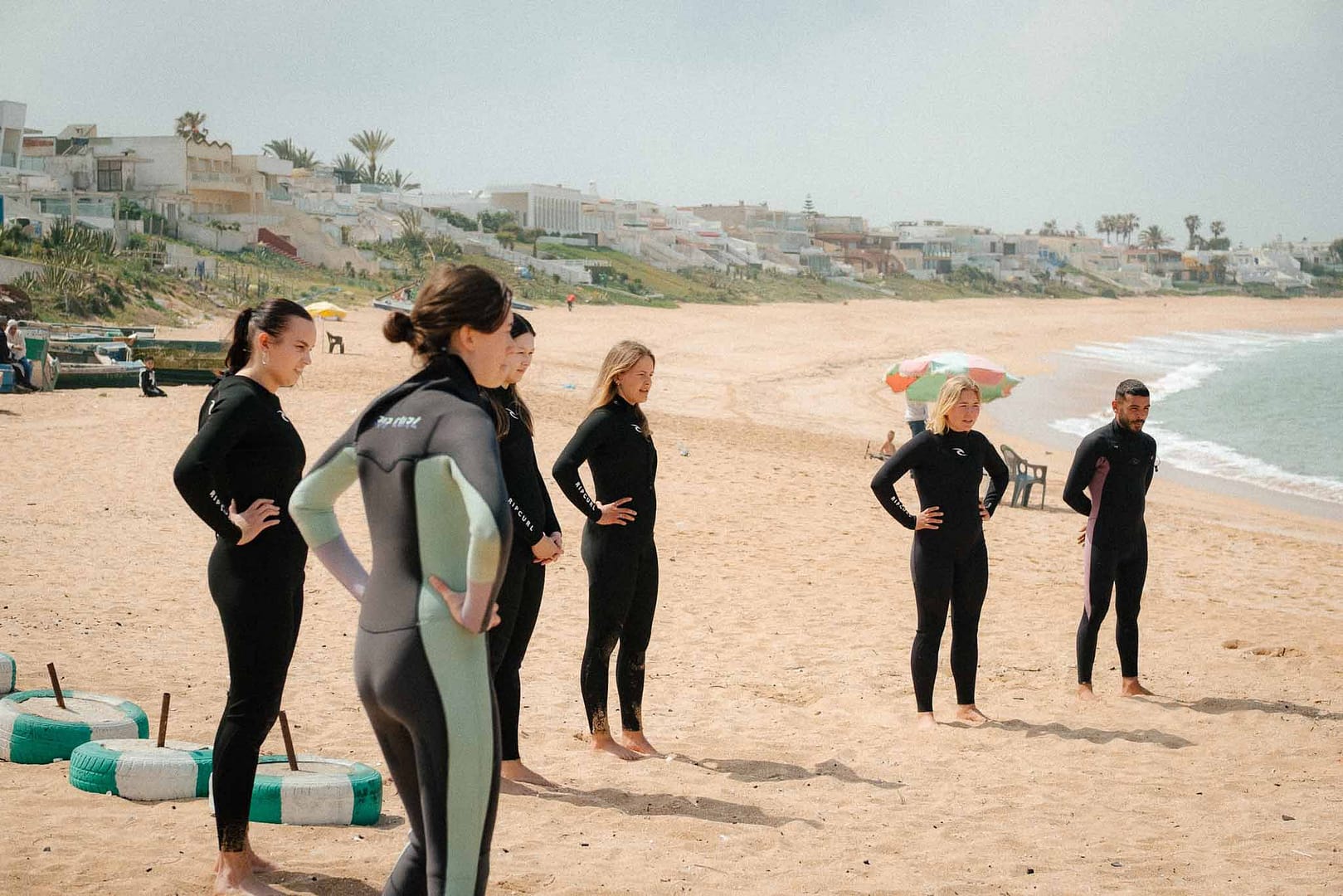
I once helped teach surfing to a client’s daughter, even though I’m not a surf instructor. My partner is. What we did differently was slow the process down instead of compressing it.
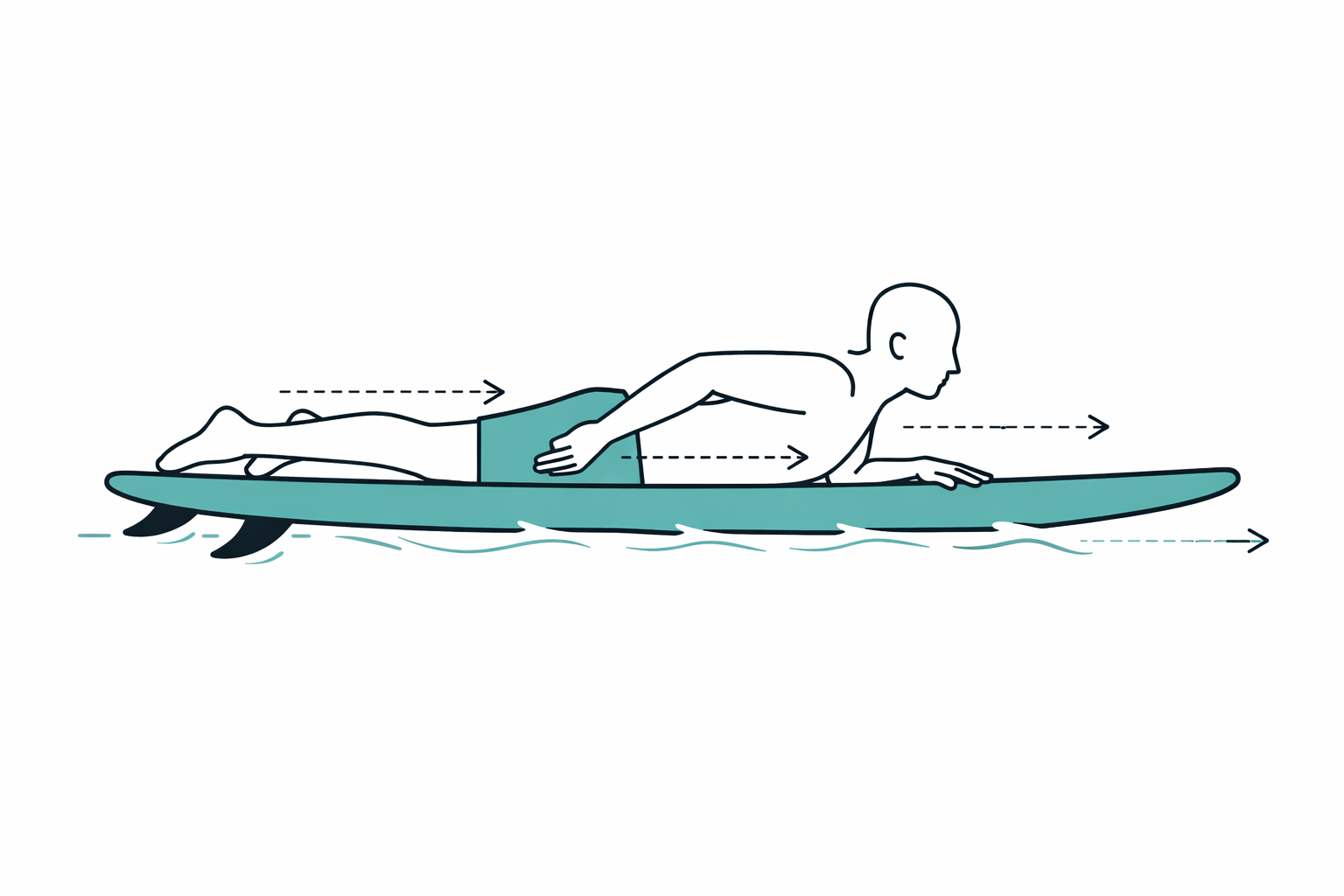
The first week wasn’t about waves at all. It was about paddling. Learning how to lie on the board, how to move efficiently, how to build comfort and endurance in the water.
The second phase removed the board entirely. We played in small shore break, letting waves crash over us, getting familiar with turbulence. Fear drops when the unknown becomes familiar.
Only later did we focus purely on the takeoff, in white water, with no paddling pressure. One skill. One objective.
By the time everything came together, surfing felt logical instead of overwhelming.
Most people are taught everything at once. Paddle, position, stand up, balance. It works for a photo, but not for long-term confidence.
What to Look For When You’re Learning How to Start Surfing
If you’re choosing where or how to learn, look for an approach that values progression over performance.
You should feel that skills are introduced step by step, that conditions match your level, and that understanding the ocean is part of the learning, not an afterthought.
Surfing is not meant to be rushed. It’s meant to be learned.
The Real Reward of Starting Surfing the Right Way
Surfing isn’t easy. That’s true.
But that difficulty is also what makes the reward so powerful.
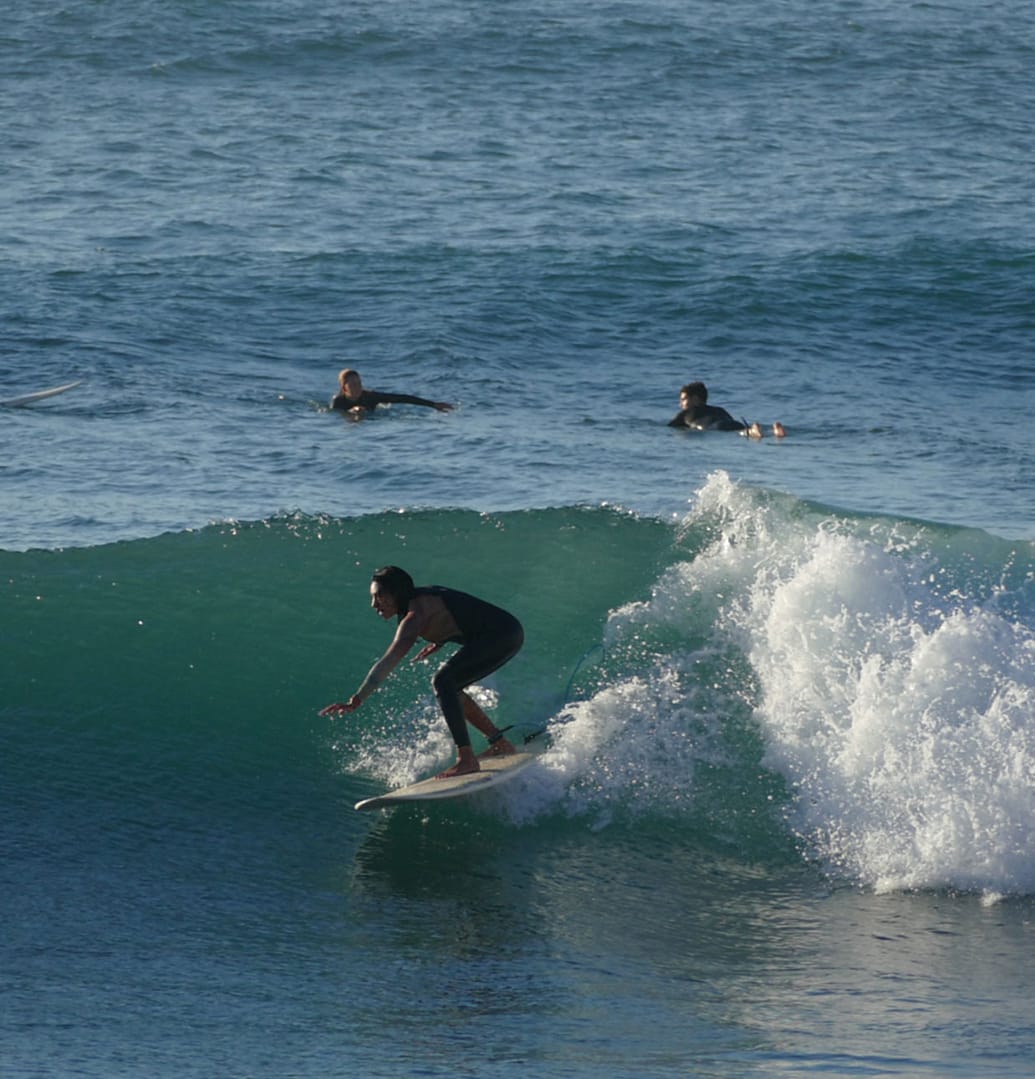
When timing, balance, and flow finally align, the feeling is hard to match. It’s presence, movement, and joy rolled into a few seconds on a wave.
If you start surfing with patience and the right foundations, that feeling doesn’t stay rare. It becomes familiar.
And that’s when surfing stops being something you try and starts becoming something you live.
About the Author: Coach Dris