CATEGORIES
START HERE
SURF IN MOROCCO
Small-group surf stays
North-Central Morocco
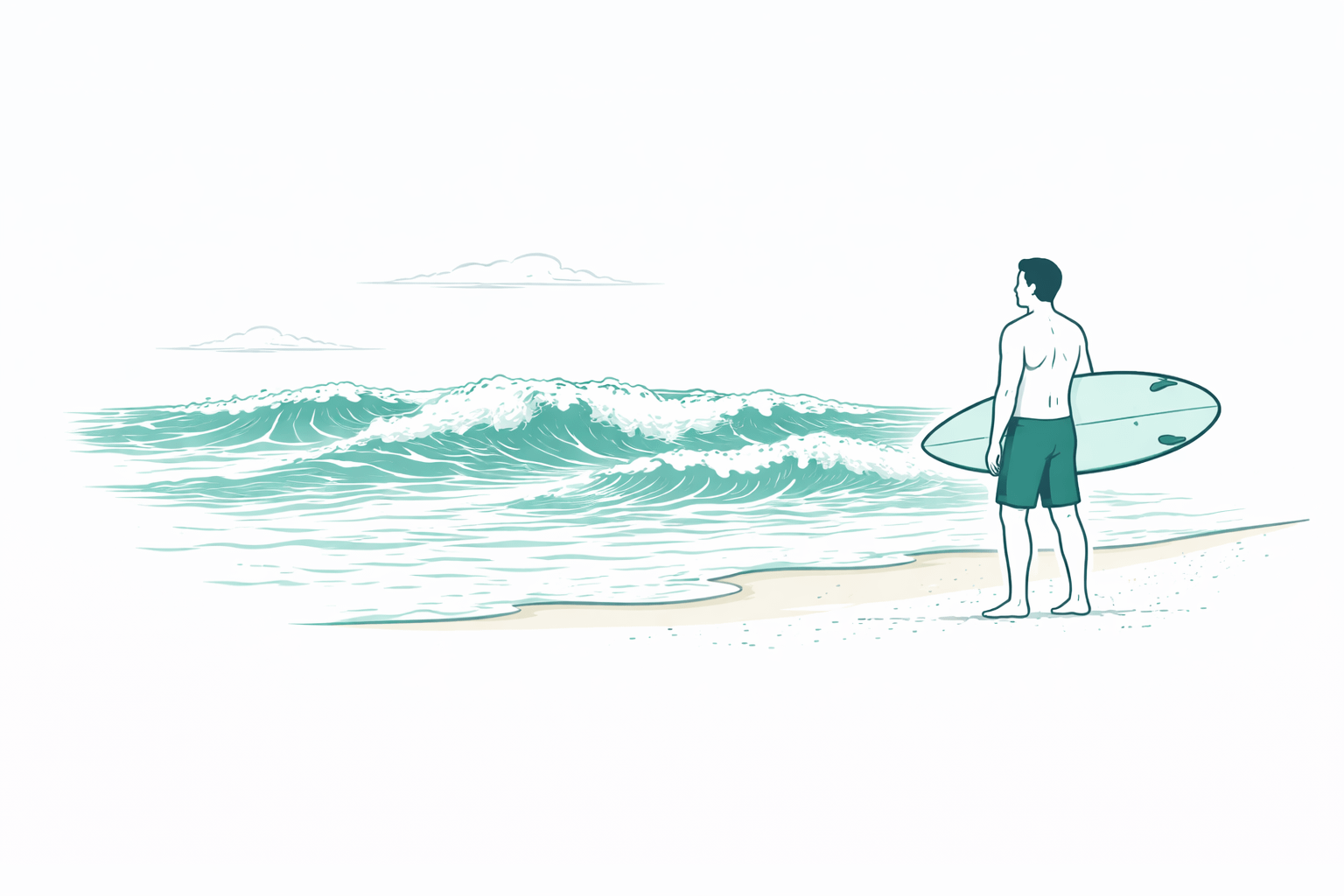
Do You Need to Surf in All Conditions to Improve?
No, you don’t need to surf in all conditions to improve.
Sometimes it’s worth it. Sometimes it’s not.
Over the past weeks, conditions have been chaotic. Storms, wind, rain, lots of white water, messy seas. It’s been unusual for this time of year, especially when we normally get cleaner windows.
And I see it every time this happens: WhatsApp groups lighting up, people chasing anything that looks remotely surfable, driven by ambition or pure fear of missing out.
I get it. I miss surfing too when I haven’t surfed for a week or ten days.
But here’s the truth. If you’re not competing, you don’t always need to force it. Sometimes the best thing you can do for your surfing is to stay out of the water.
When Surfing Bad Conditions Actually Helps
If you’re competing or training seriously, surfing a wide range of conditions is useful.
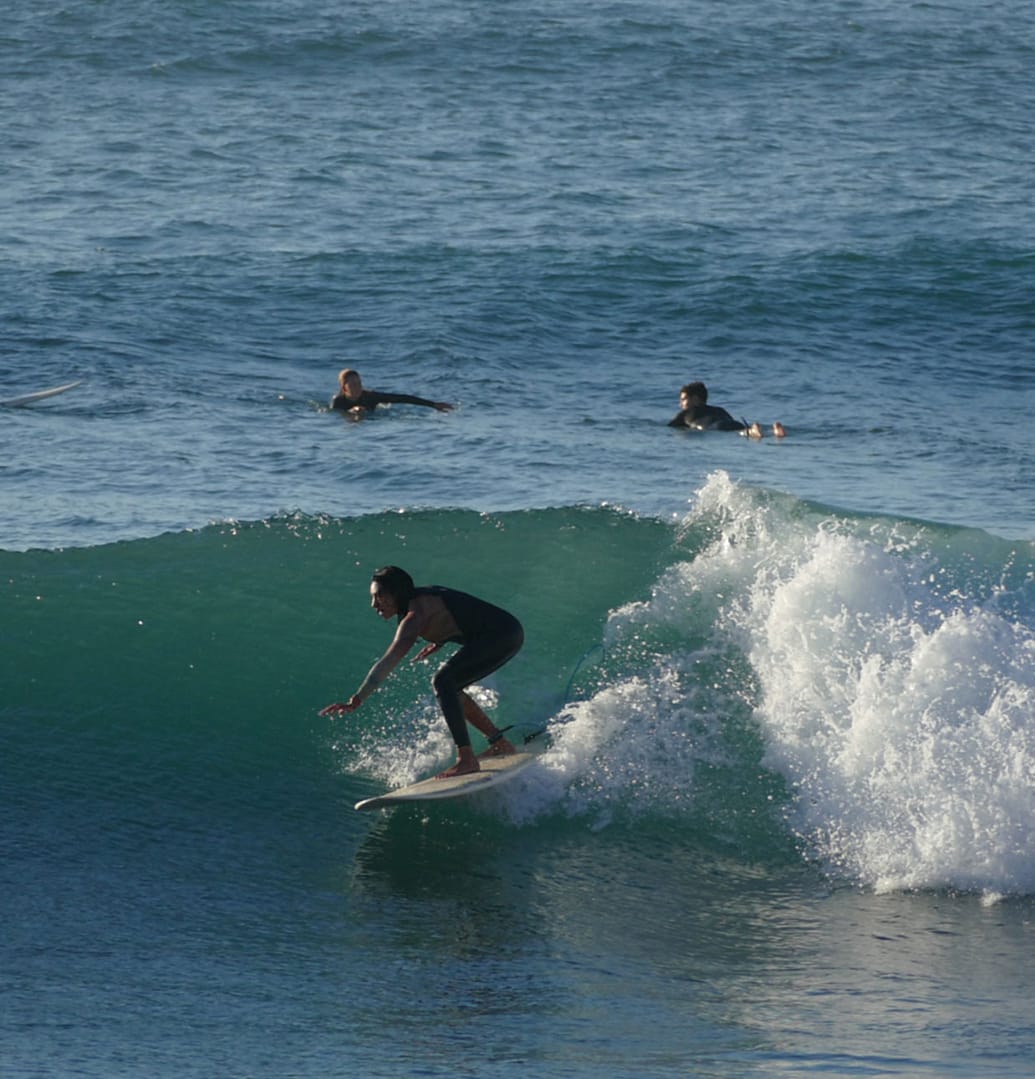
Small, weak, mushy waves teach you how to generate speed when the wave isn’t giving you much. You learn better technique, cleaner lines, and stronger movement.
Bigger, heavier waves teach you a different lesson: commitment, positioning, and composure when the ocean has real power.
And everything in between builds adaptability, which is a real performance skill.
So yes, surfing different conditions can improve your surfing.
When Surfing Bad Conditions Is Not Worth It
If the weather is bad, the ocean is messy, and the session is more punishment than practice, you don’t have to force it.
There’s a difference between “challenging” conditions and “pointless” conditions.
Challenging conditions still allow learning. You can work on something specific and leave the water feeling better than when you entered.
Pointless conditions drain you, increase injury risk, and don’t deliver meaningful reps. You spend the session getting worked, battling currents, or dodging closeouts with no real opportunity to surf.
That’s not toughness. That’s just wasted energy.
The FOMO Trap
Fear of missing out is real in surfing.
You see swell on the forecast. You hear people say they went out. You imagine you’re falling behind.
But surfing progression isn’t a straight line. It’s not “more sessions equals more progress.”
Progress comes from quality reps, good recovery, and time spent improving the parts of surfing that don’t require waves.
What to Do Instead When the Surf Is Bad
If you’re not surfing, it doesn’t mean you’re not improving.
Here are a few options that genuinely transfer to the water.
Surfskate
Surfskate is one of the best tools for improving your stance, compression, rotation, and flow. I picked it up again seriously over the past year and I’ve seen clear improvements in my surfing.
It’s not a perfect substitute, but it teaches movement patterns that many surfers never train consciously.
Watch surfing
Watching high-quality surfing is not passive if you do it with intent.
As kids, we learned by watching adults do things. The same applies here. Watching good surfing builds your visual library: timing, positioning, lines, speed generation.
It’s inspiration, yes. But it’s also learning.
Train surf fitness
Bad surf windows are a gift if you use them to build the engine.
Strength, mobility, and endurance all make surfing easier. And one of the best ways to improve paddling endurance is crawl swimming, especially if you can do it consistently.
Even a few weeks of focused training can change how you feel when you return to the ocean.
Rest and recover
This one is underrated.
Rest is not laziness. Rest is part of performance.
There’s a simple idea in training: stress plus rest equals growth.
If you’ve been surfing hard, a forced break can actually make you better. Your brain integrates what you’ve learned, movement patterns settle, and skills become more automatic.
You might feel a little rusty for the first session back, but you’re often stronger and sharper than you expect.
Final Takeaway
You don’t have to surf in all conditions to improve.
Sometimes surfing bad conditions builds adaptability. Sometimes it builds injuries and frustration.
When the surf is off, you’re not missing out as much as you think. Use that time well.
And sometimes the best thing you can do for your surfing is to stay still.
About the Author: Coach Dris