CATEGORIES
START HERE
SURF IN MOROCCO
Small-group surf stays
North-Central Morocco
Surf Gear Guide: Choosing the Right Equipment to Support Your Progress
Surf gear matters more than most people think.
Over the years, the same pattern repeats itself everywhere. Surfers are motivated, fit, excited to surf regularly. The waves are good, conditions are right.
And yet, progress stalls.
In most cases, the problem isn’t technique or effort. It’s the equipment.
This guide breaks down how to choose surf gear that actually supports progression, instead of quietly working against you.
Why Surf Gear Plays a Critical Role in Progression
When you surf regularly, whether on a trip or at home, poor gear choices show up quickly.
A board that feels “okay” for one session often becomes exhausting over several days. Too little volume, the wrong fin setup, or an unsuitable board type can turn surfing into survival mode.
The right surf gear prioritizes consistency, energy management, and wave count. Not image.
The Biggest Surf Gear Mistake: Choosing Boards That Are Too Small
There is still a strong belief in surfing that smaller boards mean better surfers.
This idea largely comes from the shortboard revolution of the 90s, and it stuck. Today, many surfers ride boards with less volume than they actually need.
Low-volume boards reduce paddling efficiency, shorten sessions, and increase fatigue. Over time, they dramatically slow progression.
Volume is not a weakness. It’s a performance tool.
Why Fish Surfboards Are One of the Best All-Round Surf Gear Choices
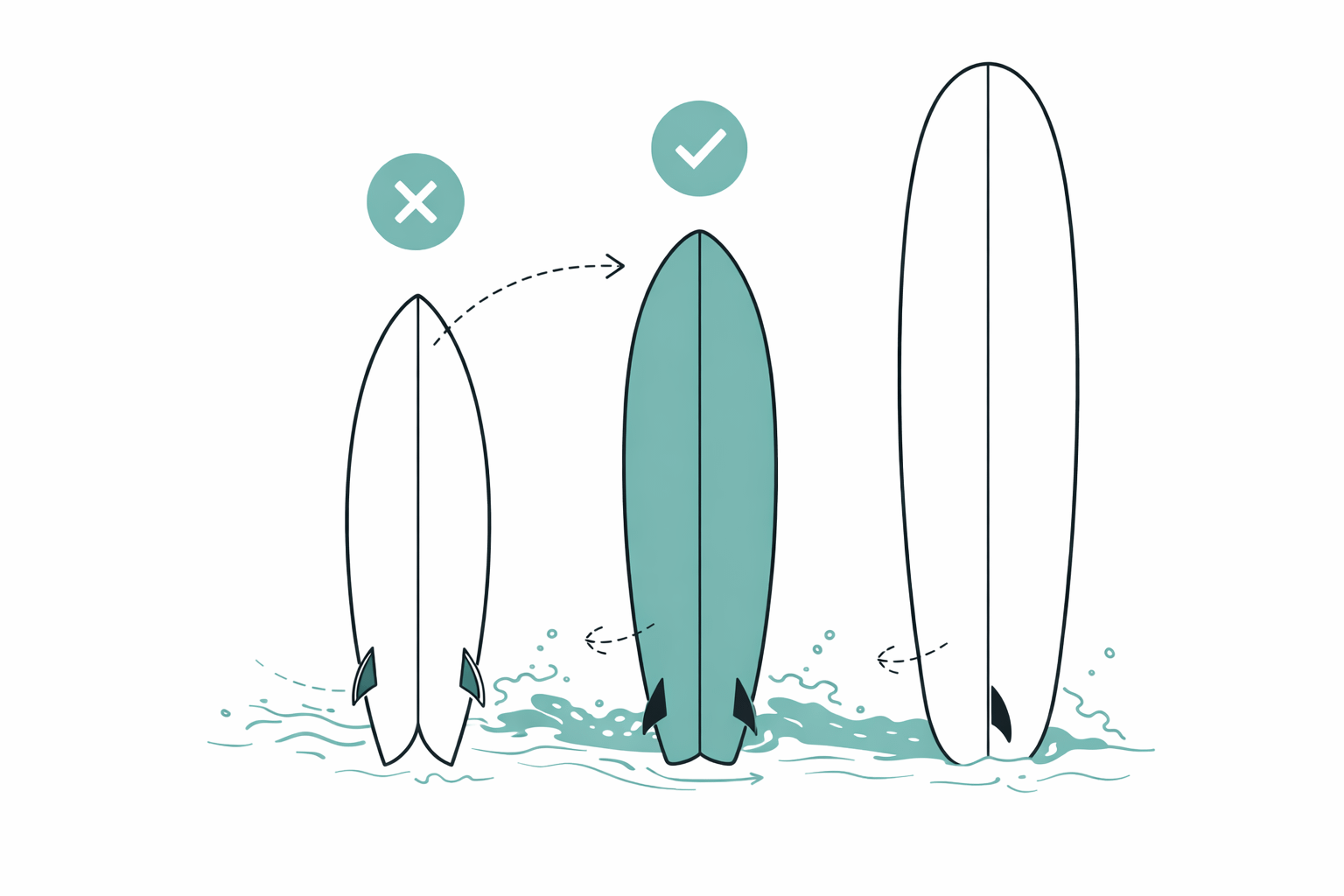
If there is one surfboard type that works for the majority of surfers, it’s the fish.
Fish surfboards are fast, forgiving, and adaptable. They generate speed easily, paddle well, and work across a wide range of conditions.
The key is sizing.
Most surfers should ride a fish that is slightly longer and more voluminous than they think they need. That extra volume increases wave count, reduces fatigue, and allows surfers to focus on flow instead of survival.
Fish boards shine in everyday surf. The kind of waves most people actually surf.
Surfboard Volume: The Most Important Surf Gear Metric
When choosing surf gear, volume matters more than length or brand.
Volume affects how easily you paddle, how early you catch waves, and how long you can surf without breaking down.
More volume means more energy left for technique, positioning, and decision-making.
Under-volumed boards might look good on the beach, but they cost you waves in the water.
The Ideal Surf Gear Quiver for Most Surfers
You don’t need a massive quiver. You need a smart one.
For most surfers, an ideal setup includes:
A mid-length fish or twin fin for everyday conditions.
A longboard for small, soft, or crowded days.
This combination covers the majority of surf conditions and keeps sessions enjoyable over time.
High-performance shortboards are designed for competition surfing and powerful, consistent waves. For most surfers, they limit progression rather than enhance it.
Surf Fins: The Most Overlooked Surf Gear Upgrade
Many surfers obsess over boards and completely ignore fins.
This is a mistake.
Fins dramatically affect speed, control, drive, and looseness. Changing fins can transform how a board feels without changing the board itself.
Different conditions call for different fin setups. Twin fins, thrusters, quads, and different fin sizes all serve a purpose.
Learning how fins affect your surfing is one of the smartest surf gear investments you can make.
Surf Gear Brands vs Local Shapers
Established surfboard brands have shaped thousands of boards and refined designs over decades. That experience matters.
Local shapers can be excellent, especially in regions with strong shaping culture. But shaping is precise work. Small errors in rocker, rails, or volume distribution can make a big difference in performance.
If you choose a local shaper, choose experience over price. Cheaper boards that don’t suit your surfing often cost more in lost progression.
Today, many regions have highly skilled local shapers with years of experience. That wasn’t always the case, but the scene has evolved significantly.
Surf Gear Should Serve Your Surfing, Not Your Image
The simplest way to evaluate surf gear is this:
If your board helps you paddle easily, catch waves early, and stay relaxed over multiple sessions, it’s doing its job.
If it makes every session feel like a fight, it’s the wrong tool.
Surf gear should support learning, endurance, and enjoyment.
Final Takeaway
Surf gear won’t magically make you a better surfer.
But the wrong gear will quietly hold you back.
Choose volume over ego.
Flow over force.
Function over image.
Your surfing experience will improve immediately.
About the Author: Coach Dris