CATEGORIES
START HERE
SURF IN MOROCCO
Small-group surf stays
North-Central Morocco
How Long Does It Take to Learn Surfing? A Realistic Answer
“How long does it take to learn surfing?” is usually the first real question people ask once curiosity turns into commitment.
And the honest answer is not the one most people want to hear.
Surfing doesn’t have a finish line. But it does have clear phases. Understanding those phases makes the journey far more enjoyable and far less frustrating.
If you’re about to start surfing, or you’ve just had your first sessions, this is what realistic progress actually looks like.
The First Sessions: Standing Up vs Learning to Surf
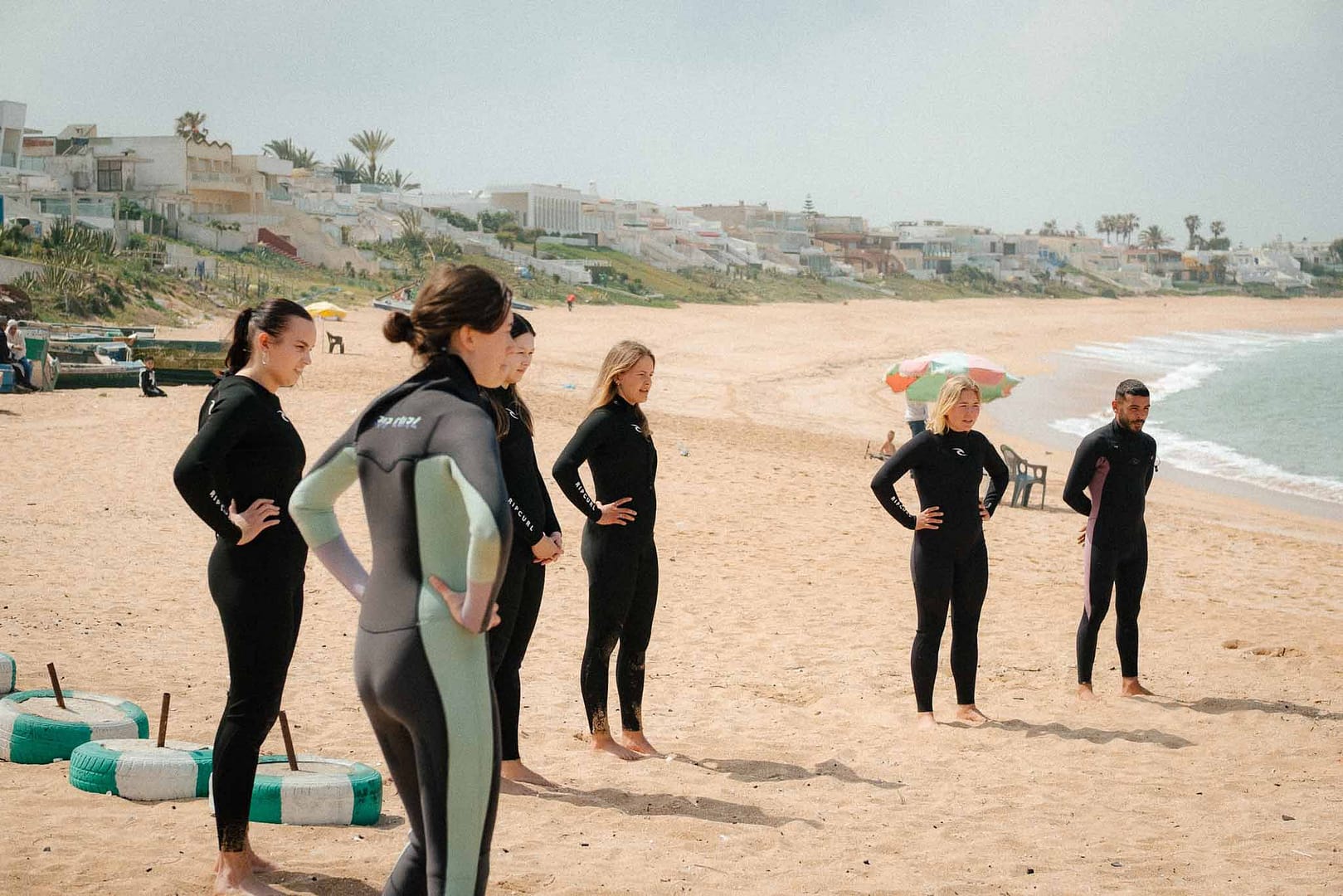
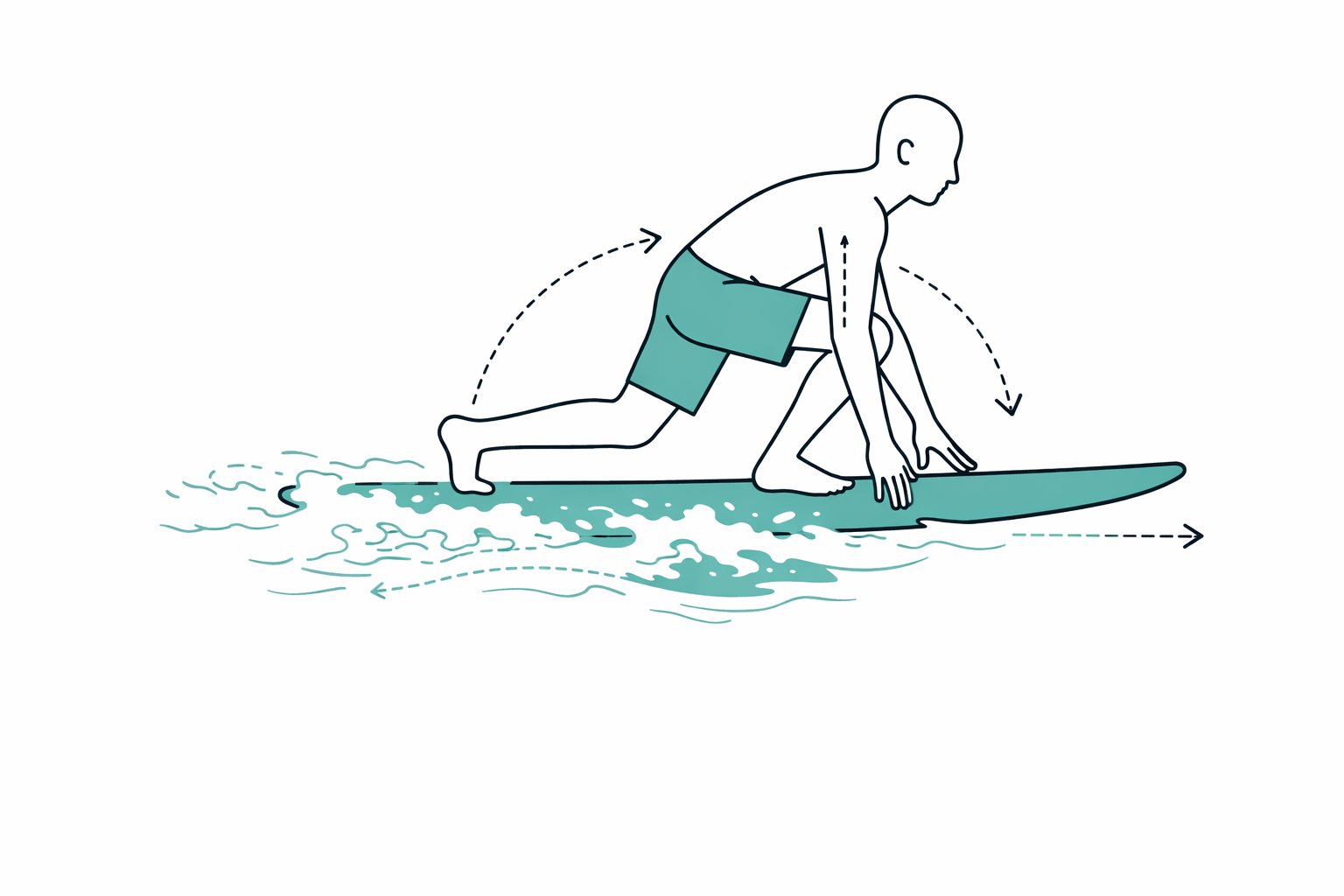
Many beginners stand up during their very first surf lesson. Sometimes even in the first hour.
That moment feels like success. And emotionally, it is.
Technically, it’s just the beginning.
Standing up once does not mean you’ve learned to surf. It means conditions were gentle, the board was forgiving, and someone put you in the right place at the right time.
This is important to understand early, because confusion here is where frustration often starts.
The First 1–2 Weeks: Getting Used to the Ocean
In the beginning, most of your energy goes into adaptation.
Your body is learning a new paddling movement. Your shoulders fatigue quickly. Balance feels unstable. Waves seem unpredictable. Even small white water feels powerful when you’re not used to it.
Progress during this phase looks like this:
You feel more comfortable lying on the board.
You paddle a little longer before getting tired.
Falling becomes less dramatic.
It doesn’t look impressive from the beach, but it matters more than you think.
The First Month: From Chaos to Familiarity
After a few weeks of consistent surfing, things start to make sense.
You begin to recognize patterns in the ocean. You understand where waves break and where they don’t. Your paddling becomes more efficient. Standing up feels less rushed and less panicked.
This is usually when beginners ask again, “So… how long does it take to learn surfing properly?”
The answer here is subtle.
You’re not learning surfing yet.
You’re learning how to not fight it.
That alone is huge progress.
3–6 Months: Real Beginner Progress
For someone surfing regularly, usually two to three times per week, this is where real beginner progression shows up.
You start catching waves without constant help.
Your timing improves.
You fall less often.
You ride waves longer, even if they’re still mostly straight.
This phase is often underestimated. Many people expect to already “surf properly” by now and feel impatient.
In reality, this is where foundations solidify.
Skipping this phase or rushing past it is one of the main reasons people plateau later.
6–12 Months: From Beginner to Independent Surfer
For most people, learning to surf independently takes around six months to a year.
Independent doesn’t mean advanced.
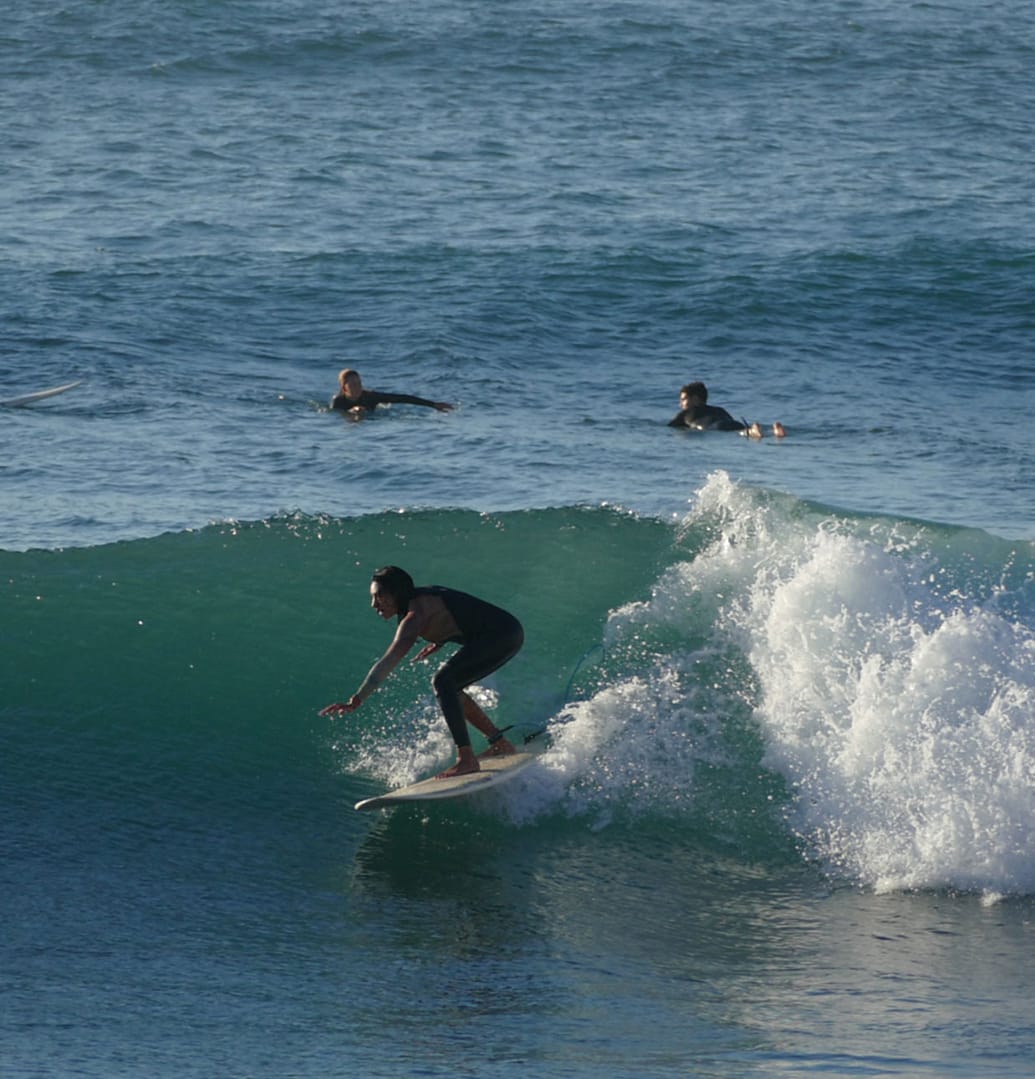
It means you can paddle out safely, choose waves, take off on your own, and ride them with control in beginner-friendly conditions.
At this stage, you no longer feel lost in the ocean. You still have a lot to learn, but surfing starts to feel natural instead of overwhelming.
This is also where many surfers make a critical decision: either they slow down and keep learning properly, or they rush equipment changes and stall.
Why Some People Learn Faster Than Others
Two people can start surfing at the same time and progress at completely different speeds.
The difference is rarely talent.
It usually comes down to frequency, guidance, equipment, and mindset.
Someone surfing once every two weeks will take much longer than someone surfing twice a week. Someone learning with feedback will progress faster than someone guessing. Someone patient with fundamentals will eventually outperform someone chasing shortcuts.
Surfing rewards consistency far more than intensity.
The Part Nobody Tells You About Learning Surfing
Here’s the part most people don’t expect.
Even after one year, even after two, surfing still humbles you.
Conditions change. Waves vary. Some days feel effortless, others feel like starting over. That doesn’t mean you’re going backwards. It means you’re interacting with nature, not mastering a machine.
This unpredictability is not a flaw. It’s the point.
So… How Long Does It Take to Learn Surfing?
If we strip it down to honest milestones:
You can stand up within days.
You can feel comfortable within weeks.
You can surf independently within months.
You keep learning for years.
Surfing doesn’t reward rushing. It rewards showing up.
If you accept that early, learning becomes lighter, progress feels smoother, and frustration fades much faster.
Final Takeaways
Learning to surf is not about how fast you stand up.
It’s about how long you stay with it.
If you give yourself time, the ocean gives back far more than you expect.
And that’s why people who truly learn surfing don’t just do it for a season.
They build their lives around it.
About the Author: Coach Dris